Buying Guide
Marine Autopilot Buying Guide
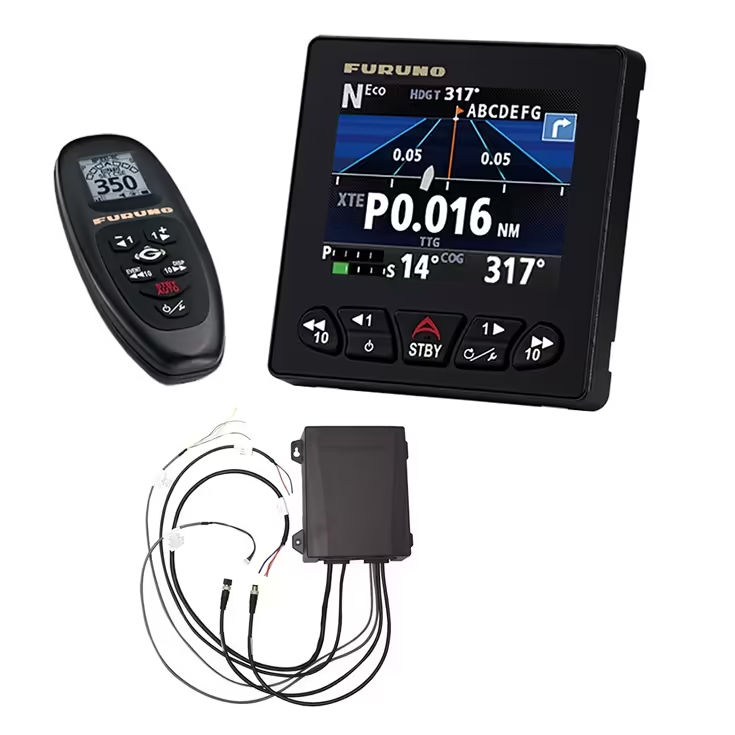
A marine autopilot steers the boat for you, holding a heading or following a route from your chartplotter. Whether it is a comfort on long passages or a working tool for single-handed fishing, the drive must suit your steering system and your boat’s size.
Main parts of an autopilot
- Control head: where you engage the pilot and adjust course.
- Course computer: the processor that calculates steering commands.
- Heading sensor: an electronic compass, often with gyro stabilization.
- Drive unit: the motor or pump that physically moves the rudder or engine.
- Rudder reference: reports rudder angle, required by some systems.
Choosing the drive
Tiller pilots push and pull the tiller on small sailboats. Wheel pilots clamp to the steering wheel and are easy to fit on smaller boats with mechanical steering. Hydraulic pumps connect to hydraulic steering systems, common on powerboats. Below-deck linear or rotary drives act directly on the rudder stock and suit larger boats with mechanical steering. Some modern outboard steering systems have autopilot capability built in.
Size it by displacement
Drives and pumps are rated by the maximum displacement they can handle, sometimes alongside cylinder size for hydraulic systems. Use the fully loaded displacement of your boat, not the dry weight, and allow a margin for rough conditions. An undersized drive works too hard and steers poorly in following seas.
Integration
Connected over NMEA 2000 or a brand network, an autopilot can follow routes and waypoints from your chartplotter, hold a wind angle on sailboats, and run patterns such as circles or zigzags for fishing.
Safety
An autopilot does not replace a proper lookout. Keep watch, know how to disengage it quickly, and make sure everyone aboard knows too.
See drives, pumps and complete packs in our marine autopilots.