Buying Guide
Marine Radar Buying Guide: Dome vs Open Array
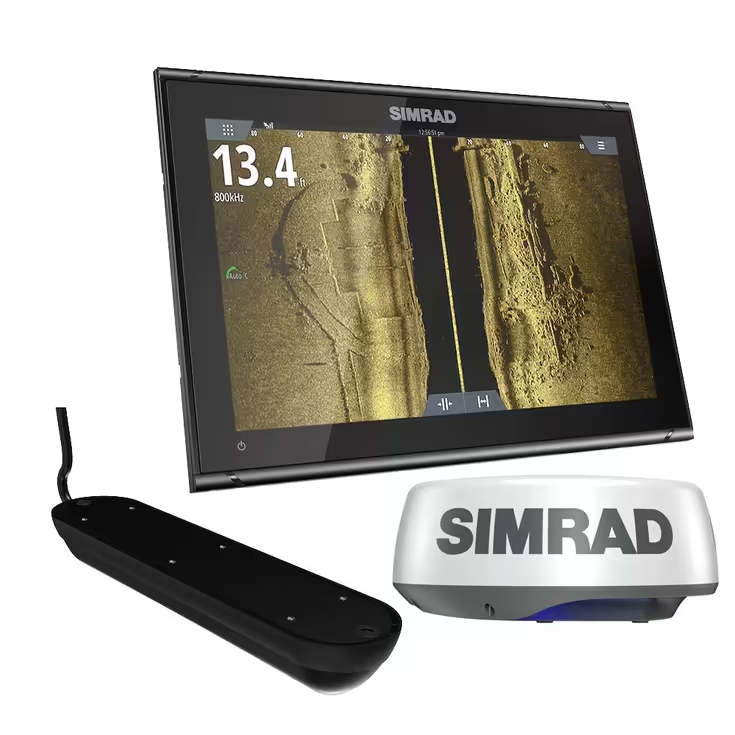
A marine radar shows other vessels, land, buoys and weather around you, day or night and in fog. Choosing one involves the antenna type, the radar technology and how it will be mounted and networked.
Radome or open array
A radome encloses the rotating antenna in a compact dome. It is lighter, uses less power and suits smaller boats, sailboats and boats with limited mounting space. An open array has a longer rotating antenna, typically 3 to 6 feet. The longer the antenna, the narrower the horizontal beam, which means better separation of targets close together and better performance at range. Open arrays suit larger powerboats.
Solid-state and Doppler radar
Traditional pulse radars use a magnetron and need warm-up time. Solid-state radars use lower transmit power, start almost instantly and usually perform better at short range. Many add Doppler processing, which colors approaching and receding targets differently so you can judge collision risk at a glance.
Range and mounting height
Maximum range on the specification sheet is limited in practice by the height of the antenna, because radar works largely line of sight. Mounting higher increases the distance to the horizon. Mount clear of obstructions, away from people’s heads and in line with the manufacturer’s safe distance guidance.
Power and installation
- Check power draw, especially on sailboats running on batteries.
- Confirm the radar is compatible with your chartplotter brand and network.
- Plan cable runs through the mast, arch or hardtop before buying.
Features worth having
- MARPA or target tracking to calculate the closest point of approach.
- Radar overlay on charts.
- Dual-range display, showing short and long range at once.
- Bird mode for finding feeding birds offshore.
Compare antenna size, power and compatibility across our marine radars.