Buying Guide
Marine Air Conditioner Sizing: How Many BTU Do You Need?
Getting marine air conditioner sizing right makes the difference between a comfortable cabin and a unit that runs all day without keeping up. Boats gain heat through hulls, decks and windows, so sizing rules are different from a house.
A starting estimate
Manufacturers publish sizing charts based on cabin volume or floor area. A common rule of thumb starts with the cabin’s volume and adjusts for conditions. Use the manufacturer’s method for the unit you choose, then adjust for the factors below.
Factors that increase the load
- Climate: tropical waters and hot sea temperatures need more capacity.
- Glass: large windows and windshields add a lot of solar heat.
- Location in the boat: cabins under the sun deck or in the salon need more than lower cabins.
- Insulation: poorly insulated hulls and decks lose cool air faster.
- People and equipment: galleys, engines and guests add heat.
System types
Self-contained units combine compressor, evaporator and controls in one package, ideal for one cabin or a small boat. Split systems separate the condensing unit from the air handler, so the noisy parts sit away from the cabin. Chilled water systems use one central chiller and air handlers in each cabin, common on larger yachts with many zones.
Power and seawater
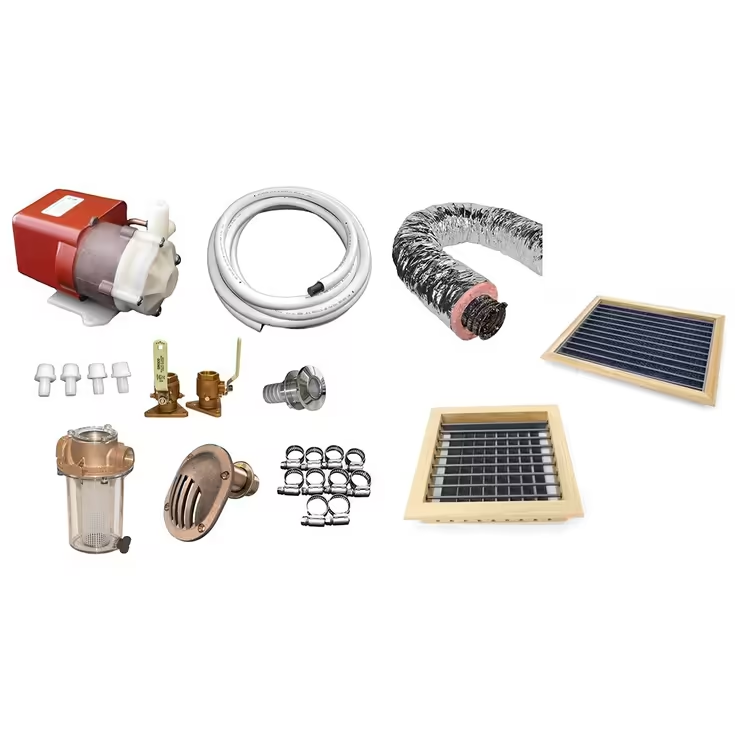
Air conditioners draw significant power, especially at start-up. Check the running and starting current against your shore power or generator, and consider soft-start options. Each system also needs a seawater pump, strainer and through-hull to cool the condenser.
Reverse cycle
Many marine units are reverse cycle, providing heating as well as cooling, useful in cooler seasons.
Compare capacity, voltage and type in our marine air conditioners, and see generator sizing if you will run them away from the dock.