Buying Guide
How to Choose a Fishfinder: CHIRP, Down and Side Imaging
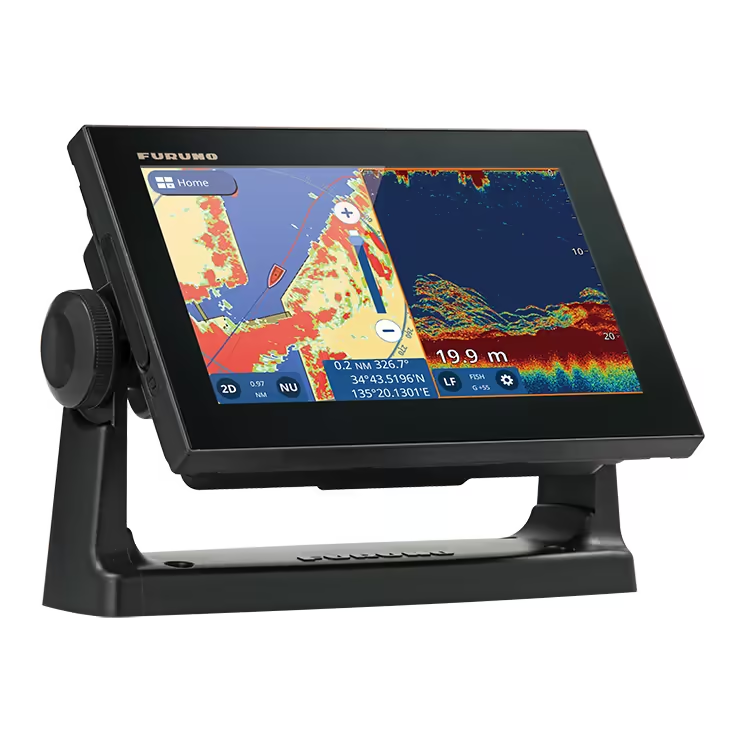
A fishfinder turns sound into a picture of what lies beneath the boat. The right unit depends on where you fish, how deep, and how much detail you want. Here is how the main technologies compare.
Traditional and CHIRP sonar
Traditional sonar sends a pulse at a single frequency. CHIRP sonar sweeps across a range of frequencies in each pulse, which improves target separation and clarity, so fish close to each other or close to the bottom are easier to distinguish. Lower frequencies reach deeper water with a wider cone; higher frequencies give finer detail in shallower water.
Down imaging
Down imaging uses a thin, high-frequency beam to create a near-photographic view of structure directly below the boat, such as brush, rocks and the bottom contour.
Side imaging
Side imaging scans out to each side of the boat, letting you search wide areas quickly and spot structure and baitfish before you pass over them. It works best at moderate speeds in shallower to mid-depth water.
Live sonar
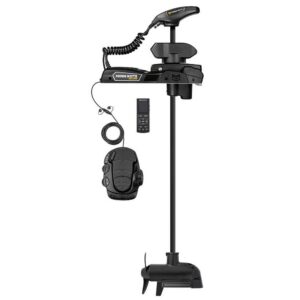
Live or real-time scanning sonar shows moving targets in real time, including fish reacting to a lure. It usually needs a dedicated transducer and a compatible display, and is often mounted on a trolling motor shaft or pole.
Screen size and combos
Larger screens make split views practical, for example sonar beside a chart. Many units are combos that add GPS and charting. If you already have a chartplotter network, a sonar module that shares data with existing displays may be the better option.
Transducers matter
- Transom mount: common on trailer boats, easy to install.
- Thru-hull: best performance at speed and in deeper water, usually on larger boats.
- In-hull: shoots through solid fiberglass, with some signal loss.
- Trolling motor mount: for bow-mounted views.
Check that the transducer is compatible with the display and supports the sonar types you want.
Next steps
Decide on the sonar types you need, then the screen size and network features. Browse our fishfinders and marine displays.